What to Expect During the Tooth Crown Process, Step by Step

Learn what to expect during the tooth crown process, from your first exam to final placement. Book your crown consultation today.
The tooth crown process usually takes two visits and involves an exam, tooth preparation, impressions, a temporary crown, and final placement. Each step is designed to restore your tooth's strength, function, and natural appearance.
Knowing what happens at every stage can ease any nervousness you may feel before treatment. With the right care, your new crown can protect your tooth for many years.

What Happens During the Tooth Crown Process?
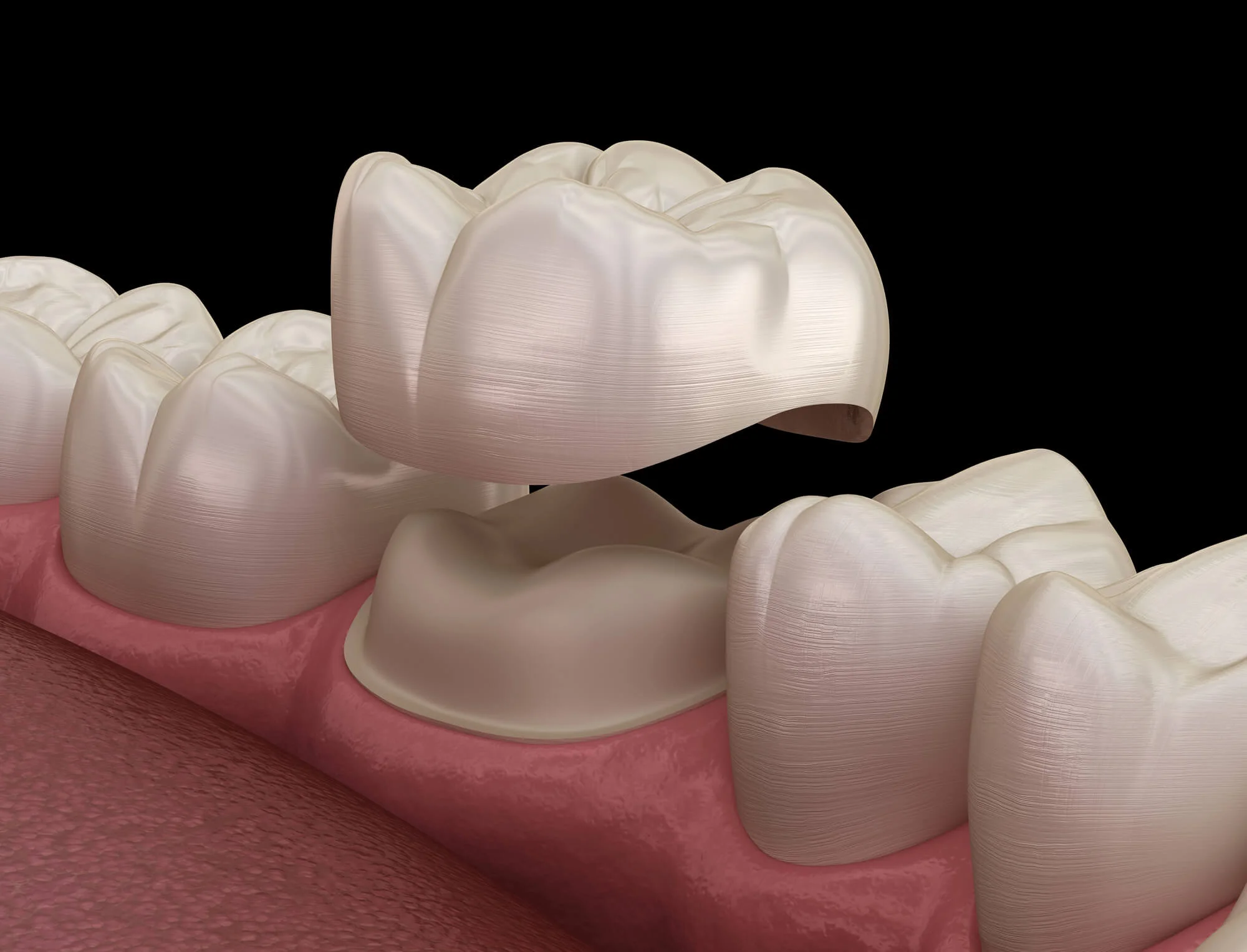
A dental crown is a custom cap that covers a damaged, weakened, or discolored tooth. The treatment is typically completed over two appointments spaced about two to three weeks apart. During the first visit, your dentist prepares the tooth and places a temporary crown. At the second visit, your permanent crown is fitted, adjusted, and bonded in place.
Step 1: Consultation and Examination
Your journey begins with a thorough exam of the affected tooth. Your dentist will take X-rays to check the roots and surrounding bone for decay, infection, or other concerns. If the tooth has deep decay or nerve damage, a root canal may be needed before the crown is placed. This step ensures the tooth is healthy enough to support a long-lasting restoration.
During this visit, your dentist will also discuss the type of crown that best fits your needs. Factors like the tooth's location, your bite, and your cosmetic goals all play a role. For crowns on visible teeth, a shade is chosen to match your surrounding teeth. This helps your new crown blend in naturally with your smile.
Step 2: Preparing the Tooth
Once the plan is set, your dentist reshapes the tooth so the crown can fit securely over it. Any decayed or weakened structure is removed first. A thin layer of the outer surface is then trimmed away on all sides. If too much tooth is missing, your dentist may rebuild it with filling material to create a strong foundation.
Is the Area Numbed?
Yes, your dentist will use local anesthesia to numb the tooth and surrounding gums before preparation begins. You may feel slight pressure or vibration, but you should not feel pain. Patients with dental anxiety may also ask about sedation options for added comfort. Your dental team will check in with you throughout the procedure.
Step 3: Taking Impressions
After the tooth is shaped, your dentist takes an impression to capture its exact size and form. Many offices use digital scanners, while others use a soft putty material. The impression also records how your upper and lower teeth meet when you bite. This information is sent to a dental lab, where skilled technicians craft your custom crown.
Step 4: Placing a Temporary Crown
While your permanent crown is being made, a temporary crown protects the prepared tooth. It is usually made of acrylic or composite material and attached with temporary cement. This crown keeps the tooth from becoming sensitive and helps maintain your bite. It also allows you to eat, speak, and smile normally between visits.
Step 5: Fitting the Permanent Crown
At your second appointment, your dentist removes the temporary crown and cleans the tooth. The permanent crown is placed to check its fit, shape, and color. Small adjustments are made so your bite feels natural and comfortable. Once everything looks right, the crown is permanently bonded or cemented into place.
How Long Does the Entire Process Take?
Each appointment typically lasts about one to two hours. The time between visits is usually two to three weeks while the lab creates your crown. If a root canal or other treatment is needed first, the overall timeline may be longer. Your dentist will give you a clear schedule during your consultation.
Are Same-Day Crowns an Option?
Some dental offices offer same-day crowns made with in-office milling technology. This approach allows the crown to be designed and placed in a single visit. It eliminates the need for a temporary crown and a second appointment. Ask your dentist whether this option is available and suitable for your tooth.
How to Care for Your Temporary Crown
Temporary crowns are not as strong as permanent ones, so gentle care is important. A few simple habits help keep it secure until your next visit. Follow these tips:
- Avoid sticky or hard foods like gum, caramel, nuts, and ice
- Chew on the opposite side of your mouth when possible
- Slide floss out sideways and call your dentist if the crown comes loose
What to Expect After Your Crown Is Placed
It is normal to feel mild sensitivity or gum tenderness for a few days after placement. Over-the-counter pain relievers can help with any discomfort. Your new crown may feel slightly different at first, but most patients adjust quickly. If your bite feels uneven after a few days, contact your dentist for a quick adjustment.
How Long Do Dental Crowns Last?
With proper care, most dental crowns last 10 to 15 years or longer. Brushing twice a day and flossing daily protects the tooth underneath from decay. Wearing a night guard can prevent damage if you grind your teeth. Regular checkups allow your dentist to catch small issues before they become bigger problems.
Frequently Asked Questions
Does getting a crown hurt?
Most patients feel little to no pain during the procedure thanks to local anesthesia. Some mild soreness afterward is normal and usually fades within a few days. Your dentist can recommend ways to stay comfortable during recovery.
Can I eat normally after getting a crown?
With a temporary crown, you should avoid sticky and hard foods. After your permanent crown is placed, you can usually return to normal eating once the numbness wears off. Your dentist may suggest waiting a day before chewing very hard foods.
Why do I need a crown instead of a filling?
Fillings work well for small areas of decay. When a tooth is cracked, heavily decayed, or weakened by a large filling, a crown provides more protection. It covers the entire tooth to prevent further damage.
Will my crown look natural?
Yes, modern crowns are designed to match the color, shape, and size of your natural teeth. Porcelain and ceramic options closely mimic the look of enamel. Most people will not be able to tell that you have a crown.
Can a crown get a cavity?
The crown itself cannot decay, but the natural tooth underneath still can. Decay often starts where the crown meets the gumline. Good daily hygiene and regular dental visits help prevent this problem.

Start Your Tooth Crown Process With Confidence
Restoring a damaged tooth is easier when you know exactly what to expect. Our team will guide you through every visit, answer your questions, and make sure you feel comfortable along the way. We create custom crowns designed to look natural and last for years.
Contact Hillsborough Dental today to schedule your consultation and take the first step toward a stronger, healthier smile.
What Our Hillsborough Township, NJ Dental Patients Are Saying
Call or Book an Appointment Now at Our Hillsborough Township, NJ Dentist Office
Learn more about all of our Hillsborough Township dental services and modern technology.
(908) 359-1112Request an Appointment